

Conveyor types, structures, applications, and key design considerations for industrial conveyors. We provide a full range of reliable conveyor belts and components in Ho Chi Minh City.
Conveyor systems (belt conveyors) are essential material-handling solutions in modern manufacturing. Common types include rubber conveyors, feeder conveyors, heat-resistant conveyors, roller conveyors, plastic conveyors, stainless-steel conveyors, wire mesh belts, chain conveyors, PVC/PU belts, plastic chain, stainless-steel chain, wire mesh belts, curve conveyors, spiral conveyors, slat chain conveyors, overhead conveyors, telescopic conveyors… Each type is engineered for specific handling requirements across different industries.
Selecting the right conveyor ensures optimized production, reduced operating costs, improved efficiency and enhanced workplace safety. Every conveyor type has its own structure, belt material, load capacity, heat resistance, wear resistance and application. To fully understand conveyor systems, one must look into their construction, technical characteristics, advantages, limitations and selection criteria. This article provides a comprehensive overview of conveyor structure, conveyor belts and optimal solutions for factories.
Conveyor Structure: Components and Basic Operating Principles
A conveyor system consists of interconnected mechanical components that work together to create a complete transport mechanism. Key components include:
- Conveyor frame: The load-bearing structure, typically made from powder-coated steel, stainless steel or aluminum profiles. It provides rigidity and stability.
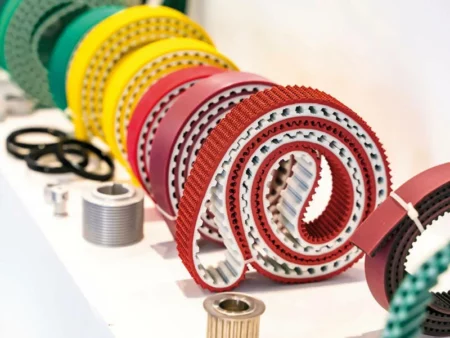
- Conveyor belt: The element in direct contact with materials. It may be PVC, PU, rubber, stainless-steel mesh, plastic chain or metal chain depending on the application.
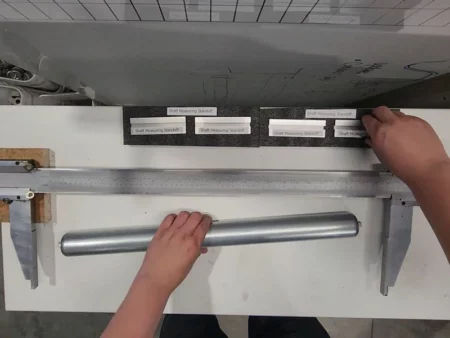
- Rollers: Support the belt and maintain smooth movement. Includes drive rollers, idler rollers, carrying rollers and tapered rollers for curve conveyors.
- Pulleys (drive & tail drums): Transmit power to the belt. Usually made from steel or stainless steel, often rubber-lagged for higher friction.
- Motor & gearbox: Provide driving force and control belt speed. Available in foot-mounted, flange-mounted, hollow-shaft, right-angle and chain-drive configurations.
- Tensioning & tracking system: Includes take-ups, springs, bearings and anti-skew devices to keep the belt tight and centered.
- Electrical control panel: Includes VFD, PLC, sensors and push buttons for speed control, direction, start/stop and system protection.
- Accessories: Side guides, cleats, skirtboards and other belt accessories may be integrated depending on the application.
- Operating principle: The belt moves due to friction between the belt surface and the drive pulley. When the motor turns the pulley, the belt moves, supported by idler rollers, ensuring stable and aligned movement.
Common Conveyor Types Used in Industrial Production
Rubber Belt Conveyor
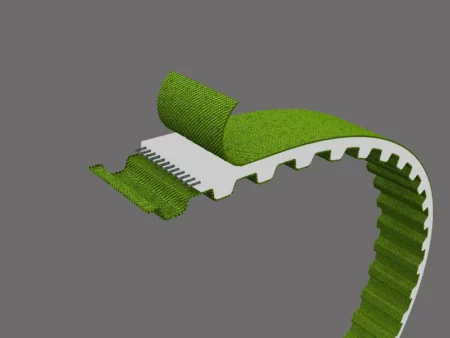
Rubber belts are among the earliest and most widely used due to high load capacity, impact resistance, abrasion resistance and durability in harsh environments. Rubber conveyor belts consist of multiple layers: top rubber cover, EP fabric reinforcement, intermediate rubber layer, and optional steel-cord reinforcement for heavy-duty applications. Applications include mining, cement, aggregates, heavy materials, outdoor conveying, chemical environments and high-temperature products. Selection depends on transported materials, load, speed, working environment and budget (smooth, chevron, heat-resistant, oil-resistant, chemical-resistant, steel-cord, etc.).
Feeder Conveyor (Feeding System)
Designed to automatically feed materials into production lines with controlled flow and minimized spillage. Typical design includes a large hopper, guides, spill-proof structure, load cells and VFD speed control. Used in food processing, pharmaceuticals, chemicals, construction materials and any system requiring accurate continuous feeding.
Heat-Resistant Conveyor Systems
Engineered for material handling under high temperatures. Common types:
- Heat-resistant rubber belts: For temperatures up to 700°C in clinker, cement and hot material handling.
- Teflon mesh belts: Working range −70°C to 260°C, used in UV dryers, screen printing and food processing.
- Stainless-steel mesh belts: Working range −96°C to 600°C, used for drying, steaming, freezing and baking.
Felt belts: Up to 600°C for printing, drying, carton manufacturing and textile processing.
Selection must be based on maximum temperature, environment and belt material.
Roller Conveyor
Uses rollers arranged along the frame to transport flat-bottom items such as cartons, pallets and crates. Roller types include:
- Galvanized steel rollers – heavy-duty
- Stainless-steel rollers – corrosion-resistant
- Plastic rollers (PA, PU, PP, POM) – lightweight and quiet
Available as gravity conveyors or motor-driven roller conveyors. Common in warehouses, packaging lines, assembly, food, pharmaceuticals, automotive and logistics.
Plastic Belt Conveyor (PVC, PU, Modular Belt)
- PVC belts: Affordable, easy to fabricate. Not suitable for high temperatures or direct food contact.
- PU belts: Food-grade, safe, flexible, heat-resistant (−40°C to 100°C). Used for fresh food, medical and pharmaceutical applications.
- Modular plastic belts: Injection-molded from POM, PP, PE or PA. Interlocking “brick-style” modules form a durable belt suitable for wet or uneven environments.
Stainless-Steel Conveyor & Stainless-Steel Wire Mesh Conveyor
Known for corrosion resistance, hygiene and high temperature capability. Stainless-steel frame + belt is ideal for food, seafood, chemicals and harsh environments. Wire mesh belts available in spiral weave, balanced weave or grid mesh. Suitable for 700°C operation. Perfect for drying, steaming, freezing, washing, printing, metallurgical and electronic industries. Meet international standards: FDA, HACCP, ISO 22000.
Chain Conveyors (Plastic Chain, Stainless-Steel Chain, Slat Chain, Overhead Chain)
Chain conveyors use interlinked chain plates for stable and reliable conveying.
- Plastic chain: Beverage, cosmetics, food, bottle & container handling.
- Stainless-steel chain: Heavy load, abrasion-resistant, high-temperature environments.
- Slat top chain: Metal hinged plates for automotive, mining, heavy parts.
- Overhead chain: Suspended transport for painting lines, automotive parts and poultry processing.
Available in straight, curve or incline versions.
Wire Mesh Conveyors
Wire mesh belts allow airflow, drainage and heat resistance. Common in drying, steaming, cooling, freezing, washing and industrial processing.
Curve Conveyor
Used for direction changes at 45°, 90°, 135° or 180°. Requires precise machining of tapered pulleys and guidance systems to prevent belt tracking issues. Available in PVC, PU, roller, plastic chain, stainless chain or mesh belt designs.
Spiral Conveyor
A space-saving multi-tier vertical conveyor. Benefits:
- Saves floor space
- Extends dwell time for cooling, drying or freezing
- Efficient vertical transport
Used in food processing, baked goods, seafood, beverages and logistics.
Telescopic Conveyor
Extendable and retractable conveyors for warehouses and loading docks. Ideal for container loading/unloading, parcel handling and logistics operations.
Design Considerations, Maintenance & Safety Standards
Drive System & Tensioning
Includes:
- Motor & gearbox (6W–160kW)
- Drive/tail pulleys
- VFD
- Bearings, tensioners, take-ups
Common Issues & Troubleshooting
- Belt misalignment
- Belt damage or tearing
- Motor overload
- Noise or vibration
Proper alignment, lubrication, cleaning and scheduled maintenance are essential.
Food-Grade Conveyor Standards
Food conveyors must comply with:
- FDA (materials in contact with food)
- EU 1935/2004 (overall and specific migration limits)
- HACCP (hazard analysis & control)
- EHEDG, ISO 22000 (hygienic design)
Materials must be PU, POM or stainless steel—easy to clean, non-toxic, non-odor and compliant with hygiene requirements.
Summary
Industrial conveyors—including rubber, feeder, heat-resistant, roller, plastic, stainless-steel, mesh, chain, PVC/PU, curve, spiral, slat and telescopic conveyors—are essential for optimizing material handling and production efficiency. Selecting the correct conveyor type, belt material and structure ensures cost savings, increased productivity and compliance with international safety and hygiene standards.
Perason Co., Ltd Suply Conveyor Systems in Ho Chi Minh City
A leading supplier and manufacturer of industrial conveyor systems, conveyor belts, components and accessories—emphasizing safety, durability and high performance. Our engineering team provides professional consultation and optimized solutions for every production requirement.