


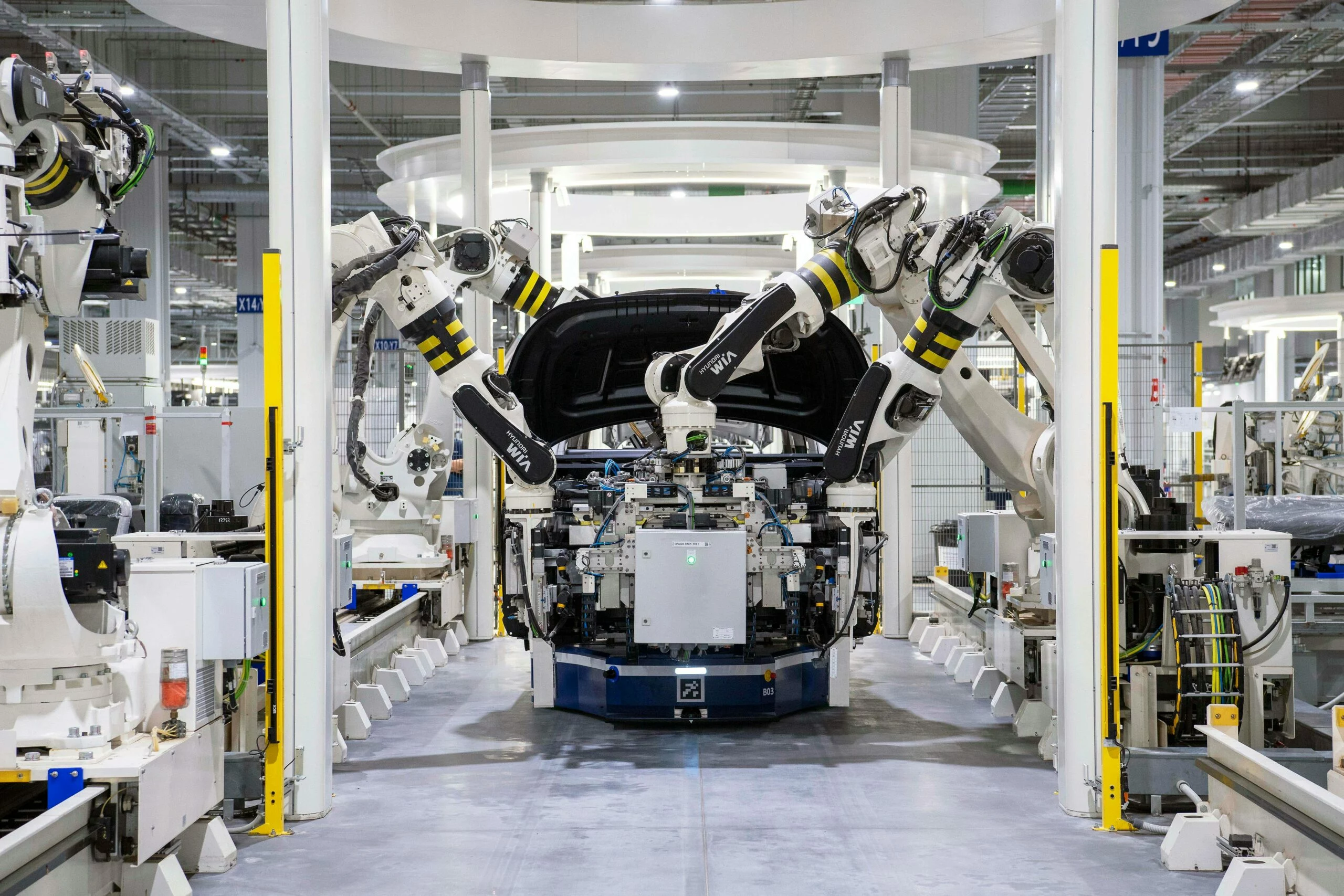
Packaging machines perform the final stage of a production line—wrapping, sealing, labeling, or securing products before they reach the market. Because every product requires a specific packaging method, no single machine works for every application. This guide covers 10 types of packaging machines commonly used in factories and warehouses, explaining how each operates, what products it suits, and what to look for before buying.
Quick Summary of Common Packaging Machines
| Machine Type | Primary Function | Typical Applications |
| Industrial Packaging Machine | Automatically doses, forms bags, fills, and seals | Powders, granules, snacks, seasonings |
| Bag Sealer | Heat-seals plastic bag openings | Food items, consumer goods |
| Cup & Tray Sealer | Heat-seals plastic or aluminum film onto cups, tubs, and trays | Beverages, ready-to-eat tray meals |
| Labeling Machine | Applies labels onto bottles, jars, and boxes | Beverages, cosmetics, pharmaceuticals |
| Strapping Machine | Wraps, tensions, and seals plastic straps around cartons or bundles | Logistics, warehousing, shipping |
| Shrink Wrap Machine | Wraps products in heat-shrinkable film for a tight fit | Boxes, bottle multipacks, household goods |
| 3D Overwrapping Machine | Wraps boxes tightly in transparent BOPP film | Medicine boxes, cosmetics, tea boxes |
| Pallet Stretch Wrapper | Wraps PE stretch film around loaded pallets | Warehousing, export shipping |
| Carton Sealer | Seals the top and bottom flaps of cartons with adhesive tape | High-volume shipping, e-commerce |
| Vacuum Packaging Machine | Evacuates air from bags before heat-sealing | Meat, seafood, dried foods |
Industrial Packaging Machine (Form-Fill-Seal)
This is a broad term for automated machines that execute a complete cycle: material feeding, dosing, forming pouches from roll stock, filling, sealing, and cutting. The most common variant is the Vertical Form-Fill-Seal (VFFS) machine, designed for free-flowing products such as powders, granules, candies, and snacks. Solid items like bars or tablets typically run on Horizontal Form-Fill-Seal (HFFS) machines.
The operating speed listed in a manufacturer's catalogue represents the theoretical maximum. Real-world throughput depends on product flowability, target bag weight, and film properties. Before finalizing a purchase, always request a live trial run using your actual product.
Bag Sealer
Bag sealers fall into two main categories. Impulse sealers are built for manual, single-bag operation: you position the pouch, press the sealing bar down, and electrical current heats the element for a few seconds before shutting off. Continuous band sealers use a conveyor belt to carry bags steadily through the heating jaws, making them ideal for high-volume runs—many models also include an embossing or ink wheel to print production dates.
The critical specification to check is the film thickness the machine can seal. Thin polyethylene (PE) bags and thick multi-layer laminated pouches require different temperature settings; selecting an underpowered sealer leads to weak seams or burnt film.
Cup & Tray Sealer
A cup and tray sealer uses heat and pressure to bond a layer of plastic or aluminum foil film onto the rim of a cup, tub, or tray. This seal prevents leaks during transport and provides tamper-evident proof that the container has not been opened. It is widely used for bubble tea, coffee cups, yogurt tubs, lunch boxes, and industrial ready-to-eat meals.
Sealing molds are custom-machined to fit a specific container diameter. If your shop or factory uses multiple cup or tray sizes, verify the cost and changeover time for interchangeable molds upfront.
Labeling Machine
Automatic labeling machines rely on optical sensors to detect incoming products and apply labels at exact positions. There are three standard configurations: wrap-around labelers for cylindrical bottles and jars, top/flat-surface labelers for boxes and pouches, and corner-wrap labelers for tamper-evident edge sealing. Many units also integrate thermal printers for batch codes and expiration dates.
Labeling precision depends heavily on the label roll itself: adhesive formulation, backing liner, and roll core diameter must match the machine's specifications. Buying a machine without testing your actual label rolls is one of the most frequent mistakes buyers make.
Strapping Machine
Strapping machines wrap polypropylene (PP) straps—or heavy-duty polyester (PET) straps—around cartons or bundles, pull them tight, and heat-weld the ends together. Semi-automatic models suit workshops packing a few dozen cartons a day. Automatic arch strapping machines integrate directly into conveyor lines at the end of production.
Strap tension is adjustable. Thin corrugated cartons or boxes containing fragile items require lower tension settings to prevent crushing or deforming the packaging.
Shrink Wrap Machine
Shrink wrapping is a two-stage process: wrapping the product loosely in shrink film, then passing it through a heated shrink tunnel where the film contracts tightly around the item. Common films include POF, PVC, and PE. POF (polyolefin) is preferred for food-contact applications because it is soft, offers high optical clarity, and is chlorine-free unlike PVC.
This method protects goods from dust and moisture while bundling individual units into multipacks—such as bottled water cases, cosmetic gift sets, stationery, and household appliances.
3D Overwrapping Machine
Also known as a cellophane overwrapper, this machine wraps rectangular boxes in crystal-clear BOPP film, folding and heat-sealing the end flaps neatly—similar to the outer wrap on a cigarette pack or perfume box. It typically includes an easy-open tear tape. The film serves as both a moisture barrier and a tamper-evident seal.
It works best for rigid boxes with consistent dimensions, including pharmaceuticals, dietary supplements, tea, confectionery, and gift sets. If your facility runs multiple box sizes, check how quickly the machine can be adjusted between changeovers.
Pallet Stretch Wrapper
Stretch wrappers apply PE stretch film around loaded pallets to stabilize goods during forklift handling and transit. Two primary designs exist: turntable wrappers (the pallet rotates while the film carriage moves vertically) and rotary arm wrappers (the pallet stays stationary while an overhead arm orbits the film around it). Rotary arm wrappers are ideal for tall, lightweight, or unstable loads that could topple if spun.
Many models feature powered pre-stretch rollers, which elongate the film before wrapping it onto the pallet. This allows you to wrap significantly more pallets per roll, delivering substantial material cost savings for high-volume shipping operations.
Carton Sealer
Carton sealers apply pressure-sensitive adhesive tape simultaneously to the top and bottom center seams of corrugated boxes in a single pass. On manual-adjustment models, operators adjust the side guide rails and upper taping head height for each box batch. Random/automatic carton sealers automatically sense each box's dimensions and adjust on the fly—ideal for lines handling mixed box sizes continuously.
These machines are staples in e-commerce fulfillment centers and mass-production warehouses where hand-taping is too slow and prone to crooked seals.
Vacuum Packaging Machine
Vacuum packaging machines evacuate air from a pouch before heat-sealing it closed. Removing oxygen slows down aerobic bacteria growth and oxidation, significantly extending the shelf life of fresh meat, fish, seafood, agricultural produce, and dried goods. There are two main styles: chamber vacuum sealers (the entire pouch is placed inside a vacuum chamber) and external/nozzle vacuum sealers (only the open edge of the pouch is clamped into the machine).
Specialized multi-layer barrier bags—typically PA/PE—must be used, as standard polyethylene bags cannot maintain a vacuum. For products containing liquids, marinades, or sauces, chamber vacuum sealers provide much cleaner and more reliable seals.
How to Choose a Packaging Machine: 5 Key Questions to Answer First
Before requesting price quotes, answer these five operational questions:
-
What is your product's physical form? Solid, liquid, powder, rigid box, or shipping carton? Defining this immediately narrows your options by half.
-
What is your daily production output? Volumes under a few hundred units per day usually only warrant semi-automatic equipment. Consider fully automatic systems once output reaches several thousand units daily.
-
What packaging materials are you using? Film composition, thickness, and pouch or carton dimensions dictate required sealing temperatures and mold geometries.
-
How much floor space and electrical capacity do you have? High-output industrial machines generally require 3-phase power and adequate clearance for product flow and operator access.
-
Who handles maintenance when a breakdown occurs? Confirm warranty terms, on-site technician response times, and local spare parts availability before purchasing.
Frequently Asked Questions (FAQ)
How many types of packaging machines are there? There is no fixed count, as classification depends on the criteria used. By automation level, equipment is grouped into manual, semi-automatic, and fully automatic machines. By function, they fall into operational categories such as bag sealing, labeling, strapping, shrink wrapping, and vacuum packaging, as detailed above.
Should I choose a semi-automatic or fully automatic machine? Semi-automatic machines require a lower upfront investment, are straightforward to operate, and suit smaller workshops or lines with frequent product changeovers. Fully automatic machines make financial sense when production volumes are high and steady, and your priority is reducing manual labor dependency.
What is the difference between vacuum packaging and shrink wrapping? Vacuum packaging evacuates air from inside a pouch to preserve food freshness and extend shelf life. Shrink wrapping simply shrinks a protective film tightly around the outside of a product or multipack for protection and retail display—it does not remove internal air.
Packaging Machine Consultation at Perason
If you are unsure which packaging system best matches your product and throughput targets, send Perason your product details, packaging specifications, and required capacity. Our engineering team will recommend the right equipment configuration and provide a tailored quotation.
Hotline: 0909.3579.86 | Email: info@perason.vn | Website: perason.vn