

PAZ PAR coating technology for PU belts helps increase wear resistance, reduce noise, limit friction and improve durability in heavy load or high-speed environments. Learn the difference between PAZ, PAR and PAZ+PAR to choose the optimal belt type for your conveyor system.
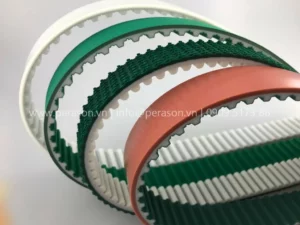
PAZ PAR coating for PU belts to increase longevity and high-speed belt drive performance. Many lines of PU belts today can be customized by grinding teeth, drilling holes, adding special coatings or adding a layer of technical green fabric. When the fabric is placed on the tooth surface, this is often called PAZ or NFT; If the fabric layer is on the back, the symbol is PAR or NFB. When both sides have fabric, the belt belongs to the PAZ+PAR or NFT+NFB group. The purpose of the article is to clearly describe the role of each type of coating for polyurethane timing belts.
PAZ / NFT coating – Green fabric on tooth side
For PAZ-coated PU belts, the contact between teeth and pulleys is better protected. The fabric layer helps limit wear due to repetitive friction, thereby extending the life of toothed belts in continuously operating transmission systems. This material also creates a vibration-reducing effect, making the belt run smoother and limiting noise when the speed increases. Thanks to its ability to resist grease and dust, the tooth surface is easier to clean and maintains long-term stability.
PAR / NFB coating – Green fabric on the back
For applications where the back of the PU belt frequently comes into contact with the guide roller or surface friction, PAR coating is the optimal choice. Fabric has a lower friction coefficient than PU, helping the toothed belt run cooler and avoiding heat build-up when running at high speeds or under heavy loads. Thanks to reduced mechanical stress, the belt is more durable and premature failure is less likely. The fabric material also helps the PU belt work stably in continuous reversing motion, where the back side is subjected to repeated impacts.
PAZ + PAR double-sided coating
When both sides are covered with fabric, PU belts achieve the highest stability. Vibrations are significantly reduced, transmission becomes smoother and more precise. This configuration often appears in automation lines, packaging machines, printing systems or product synchronization conveyors. Product life increases significantly, reduces the number of machine downtime for maintenance and optimizes long-term operating costs.